
Maximizing revenue. Simplifying care.
Home/Blog/Denial Management
Denial Management

How to Reduce Claim Denials in a California Practice

The most common denial reasons we see and the front-end checks that prevent them.

CB
CaliMed Billing Team
October 6, 2026 · 8 min read
CaliMed Billing specialist reviewing a denied claim that was resubmitted and paid

Every denied claim is revenue you already earned but haven’t been paid for. For most California practices, 10 to 15 percent of claims are denied on first submission, and many of those are never resubmitted. The good news: most denials follow predictable patterns, and the majority can be prevented before the claim goes out.

This guide covers the denial reasons we see most often in California practices, the checks that stop them, and how to work the denials that still get through.

Why denials hurt more than they look

A denial doesn’t just delay payment. Each one costs staff time to research, correct and resubmit, typically $25 to $118 per claim depending on complexity. Industry data suggests up to 65 percent of denied claims are never reworked at all, which means that revenue is simply lost.

In California, the mix of Medi-Cal managed care plans, commercial PPOs and Medicare Advantage adds another layer. A rule that applies to Blue Shield may not apply to Anthem Blue Cross, and each Medi-Cal plan sets its own authorization list.

10–15%
of claims denied on first submission
Up to 65%
of denied claims never reworked
$25–118
cost to rework one denied claim

The six most common denial reasons

When we audit a new practice, the same causes show up again and again:

01
Eligibility and coverage errors
Inactive coverage, wrong member ID or the wrong primary payer. These cause up to a quarter of all denials and are the easiest to prevent.
02
Missing prior authorization
Imaging, surgery, behavioral health and many specialty drugs need approval first. Medi-Cal managed care plans each keep their own list.
03
Modifier errors
Modifier 25 on the wrong E/M visit, or 59 used where an X modifier fits better, triggers automatic rejections.
04
Medical necessity
The diagnosis code doesn’t support the procedure billed, or the documentation doesn’t show why it was needed.
05
Duplicate claims
A resubmission sent as a new claim instead of a corrected claim looks like a duplicate to the payer.
06
Timely filing
Most commercial payers allow 90 to 180 days. Medi-Cal generally allows six months from the date of service.

Front-end checks that prevent denials

Denial prevention starts at scheduling, not at billing. These checks catch most problems before the patient is seen:

1. Verify eligibility before every visit

Run a real-time eligibility check 24 to 48 hours before the appointment and again at check-in for high-cost services. Confirm the member ID, plan type, effective dates and which plan is primary.

2. Check authorization requirements by plan

Keep an up-to-date authorization list for each payer you bill. For Medi-Cal, check the specific managed care plan, not just Medi-Cal in general.
Imaging: MRI, CT and PET scans
Outpatient surgery and procedures
Behavioral health beyond the initial visits
Specialty medications and DME
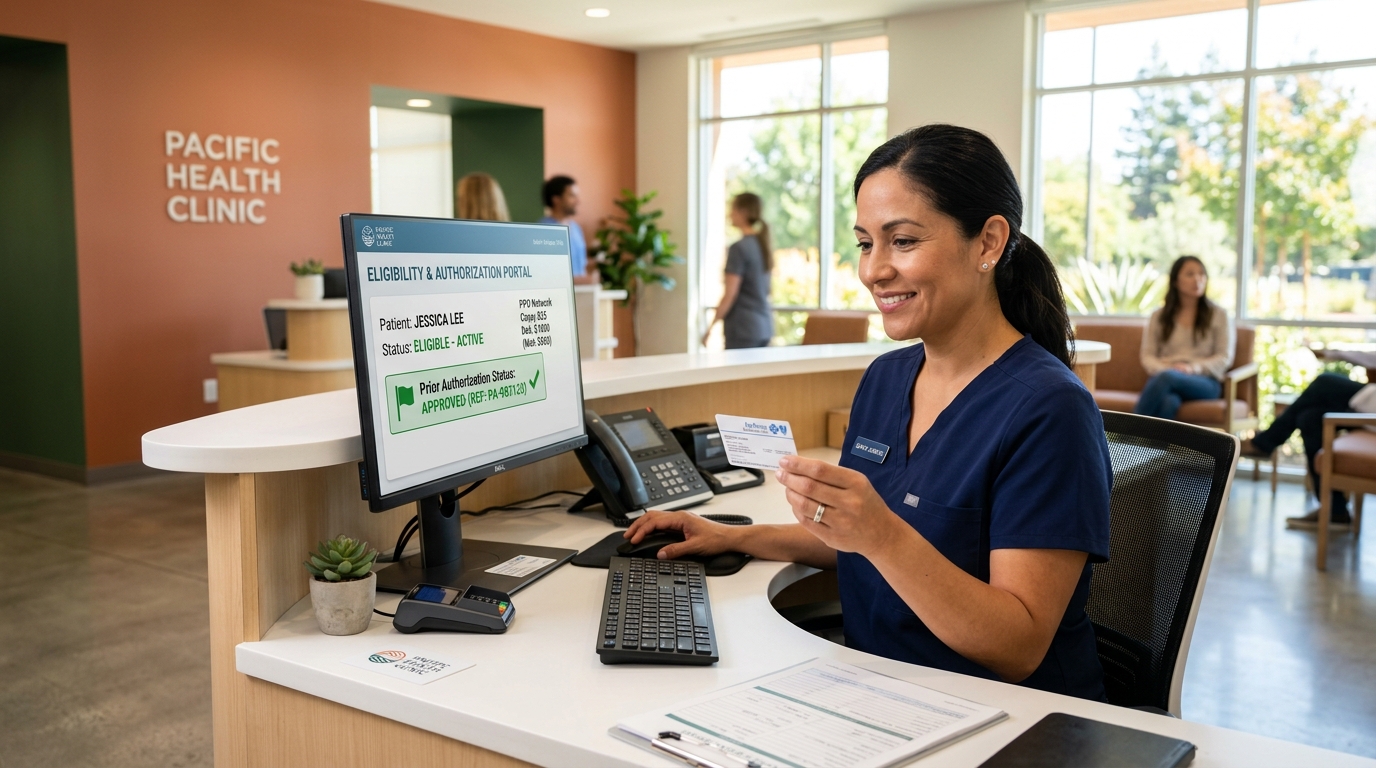
CaliMed front-desk specialist checking patient insurance card and eligibility status

3. Scrub claims before submission

A claim scrubber checks CPT and ICD-10 pairings, modifier use and payer-specific edits before the claim leaves your system. Aim for a clean claim rate of 95 percent or higher.

The cheapest denial to fix is the one that never happens. Ten minutes at the front desk can save hours of appeals later.

4. Document for medical necessity

Make sure the provider’s note clearly links the diagnosis to the service. If a procedure is only covered for certain diagnoses, the documentation has to show that diagnosis.

What to do when a claim is denied

Some denials will still get through. Work them quickly and in a consistent order:

Read the remark and reason codes on the ERA before doing anything else.
Fix and resubmit correctable errors (wrong ID, missing modifier) as a corrected claim within days, not weeks.
Appeal clinical and medical-necessity denials with the supporting notes and a short cover letter.
Log every denial by reason and payer so patterns become visible.

Track the right numbers

Review these four numbers every month. If they move in the wrong direction, look at the denial log first.

Metric
Healthy target
Clean claim rate
95% or higher
First-pass denial rate
Under 5%
Days in A/R
Under 40 days
Denials reworked
90% or more

Key takeaways

Most denials come from a handful of preventable causes.
Eligibility and authorization checks before the visit stop the largest share.
Scrub every claim and target a 95 percent clean claim rate.
Work denials fast, and track them by reason and payer.
Claim denialsMedi-CalEligibilityPrior authorizationClean claims
CB
CaliMed Billing Team
Certified coders and billing specialists helping California practices get paid accurately and on time.

Want Fewer Denials Next Month?

Our free billing audit shows your top denial reasons and what they are costing your practice.

Schedule Your Free Billing Audit